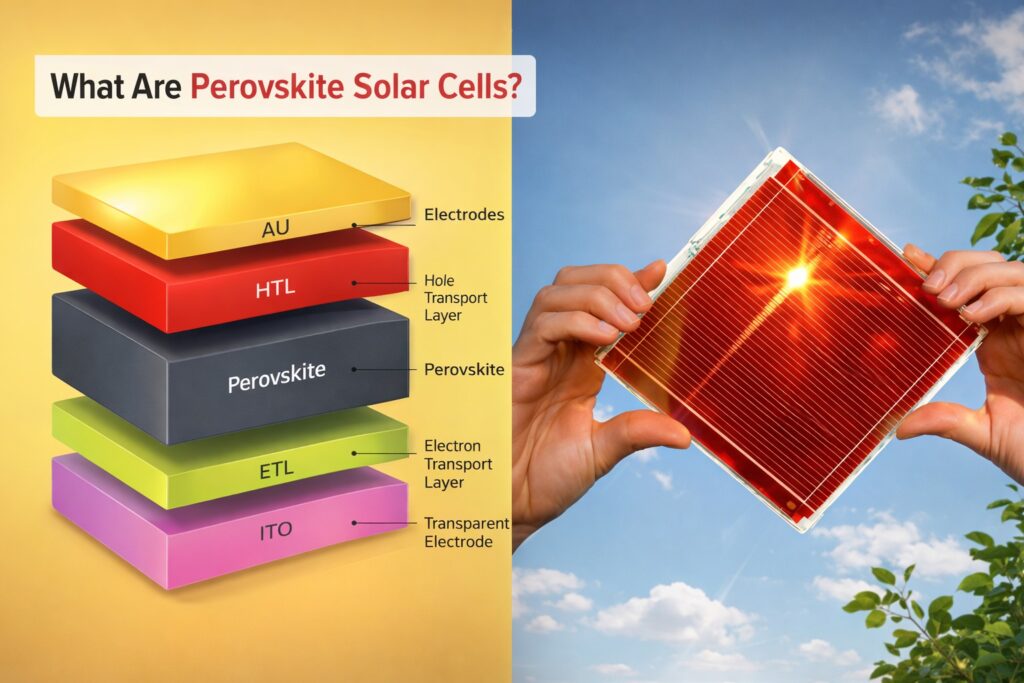
Perovskite, a titanium and calcium crystal, is more effective at absorbing light that is closer to the infrared spectrum. These lightweight and flexible cells can be manufactured using low-cost processes, making them an attractive option for future solar panel designs. Perovskite solar cells have the potential to produce higher efficiency than silicon-based solar cells. Researchers are continuously refining perovskite formulations to enhance stability and performance, potentially pushing efficiency levels beyond the current standards. Proof of this is in Switzerland, where researchers at the Swiss Federal Institute of Technology (EPFL) and the Swiss Centre for Electronics and Microtechnology (CSEM) successfully surpassed the
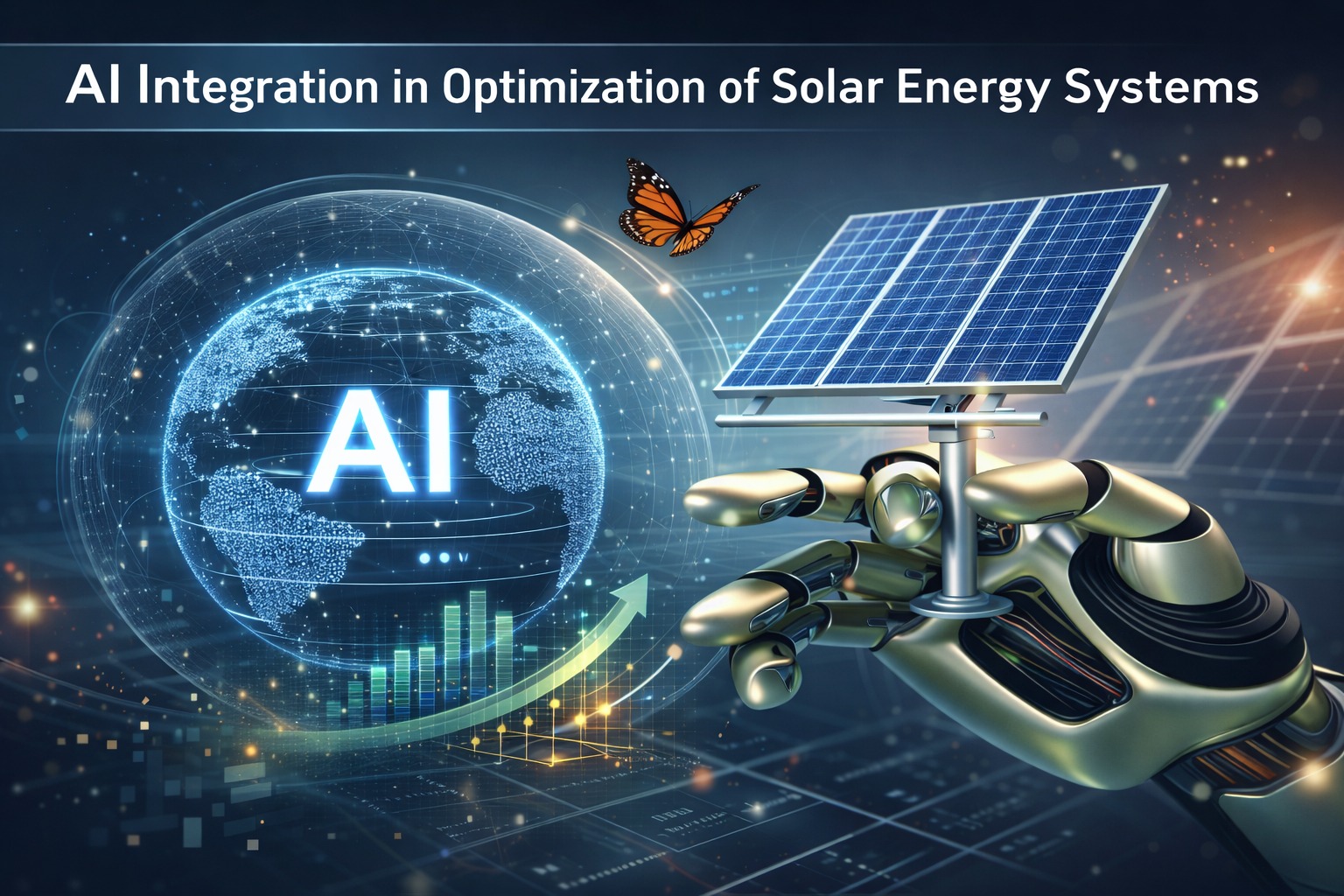
AI Integration in Optimization of Solar Energy Systems
The integration of AI into solar energy systems offers several benefits:
Increased Efficiency: AI optimizes the performance of solar panels, leading to higher energy output and improved system efficiency.
Cost Savings: By predicting maintenance needs and reducing downtime, AI helps lower operational and maintenance costs.
Enhanced Reliability: AI-driven predictive maintenance and real-time monitoring improve the reliability and longevity of solar installations.
Better Energy Management: AI improves energy forecasting and grid management, ensuring a stable and efficient energy supply.
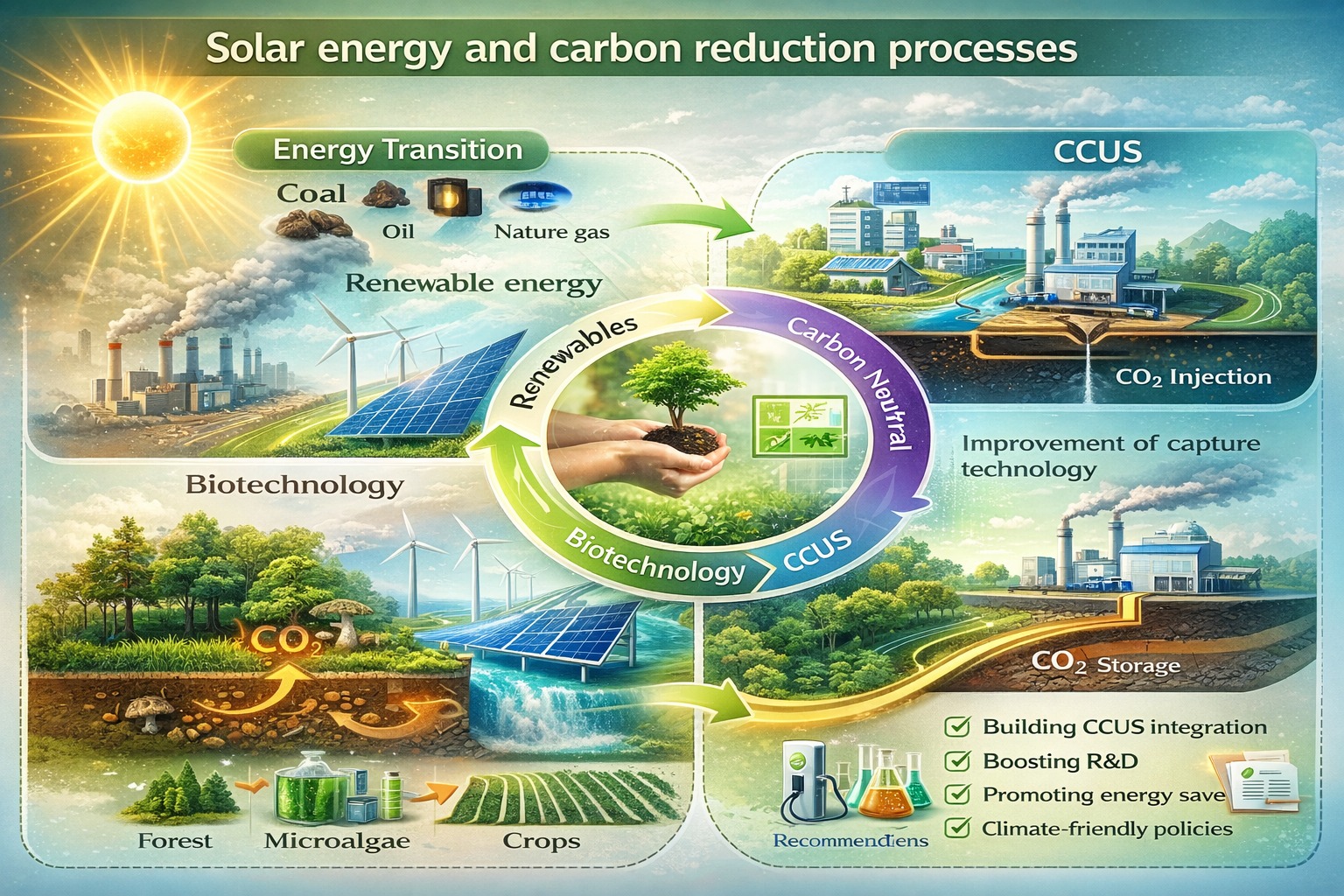
Solar energy and carbon reduction processes
Solar energy technologies and power plants do not produce air pollution or greenhouse gases
when operating. Using solar energy can have a positive, indirect effect on the environment when
solar energy replaces or reduces the use of other energy sources that have larger effects on the
environment.
However, producing and using solar energy technologies may have some environmental affects.
Solar energy technologies require materials, such as metals and glass, that are energy intensive to make. The environmental issues related to producing these materials could be associated with solar energy systems. A number of organizations and researchers have conducted PV energy payback analysis and concluded that a PV system can produce energy equivalent to the energy used for its manufacture within 1 to 4 years. Most PV systems have operating lives of up to 30 years or more.